
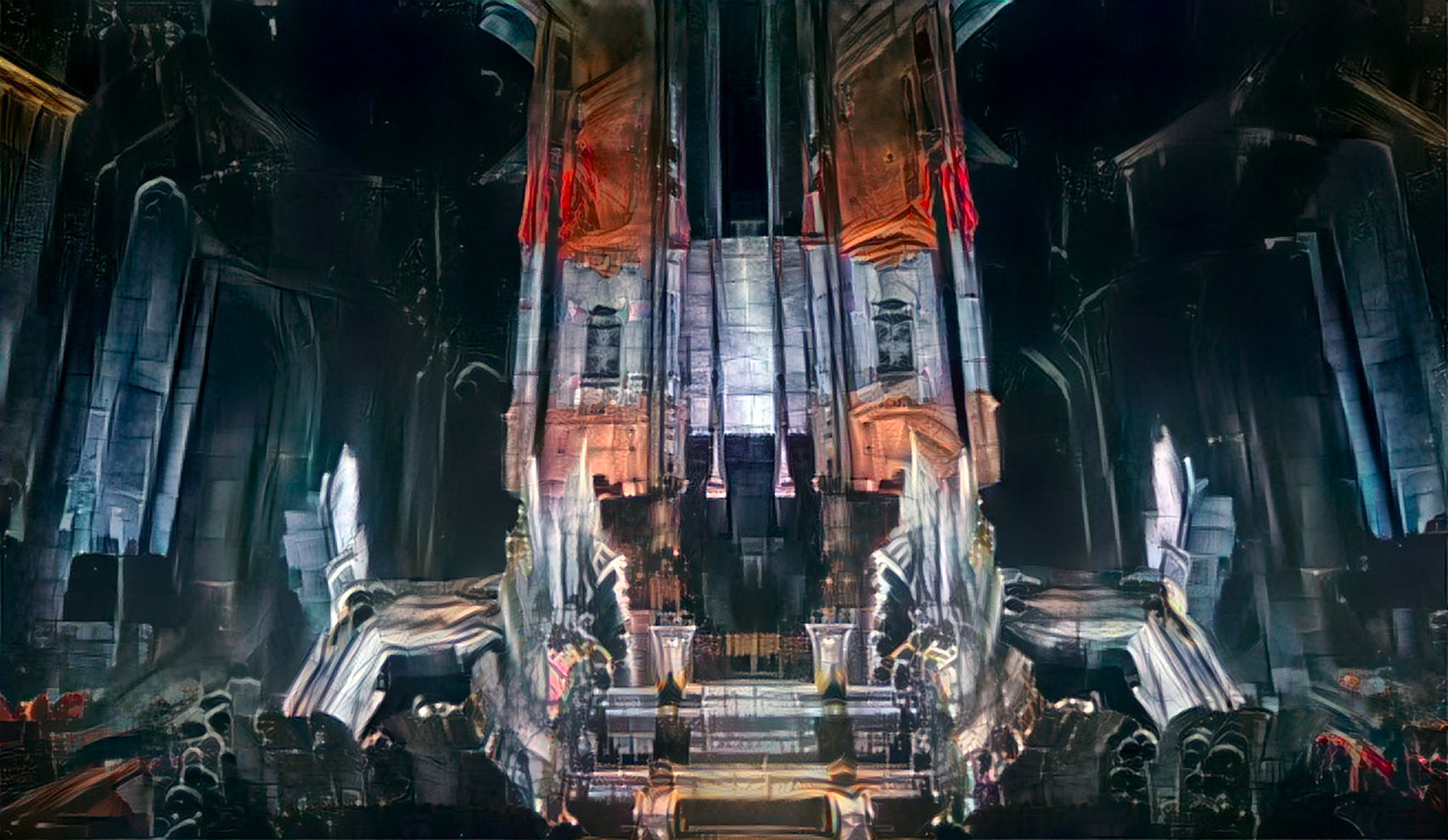
Neural Networks interpreting Fractals
There's something intensely satisfying about peering into a machine's mind.
For me, one of the most amazing things about fractals is that at first glance they seem to resemble something from real life, but at closer inspection this appears an illusion. With the advent of Google's Deep Dream and many other Neural Networks I thought it was an interesting experiment to see how AI would interpret a fractal picture. I've done two simple tests to see where this could go.
First, I gave a couple of fractal images to Google's similar image search algorithm, to see what Google would think is on the picture.
So I uploaded this image of a pure fractal:

What would Google 'think' is on this picture? Some similar images came up, not surprisingly most where buildings, churches and such:

With DeepArt you can transform any image into a 'style' using a base picture and a style picture. I used the fractal image as the base image, and the church as a style image to render this:

Here are some other examples, all made from a base image and a style image based on its 'similar images' result:


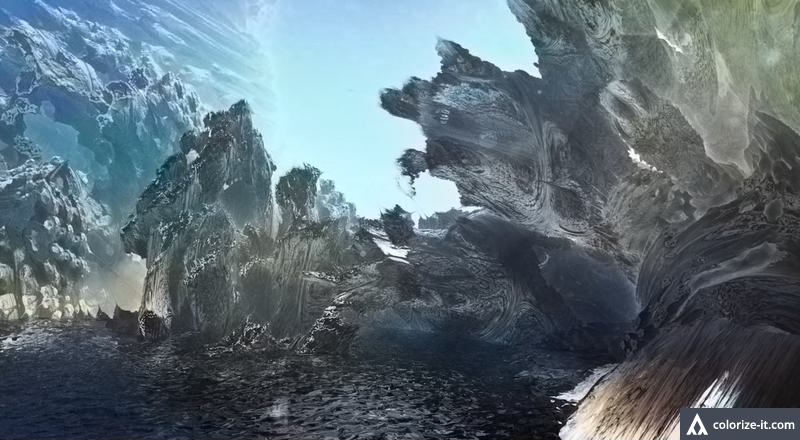
Another algorithm that uses deep learning colors in black and white pictures. Its algorithm has learned the best way to do this based on thousands of real images, so it can determine the difference between a sky which is supposed to be blue and a tree that is green.
Feeding it fractals in order to see what it would 'think' it needed to color it gave some interesting results. I made sure each image was black and white when I gave it to the algorithm. Most just got back completely sepia, which gave it still a beautiful, old look. Here's some of the most interesting results:
All processed using demos.algorithmia.com/colorize-photos/




Although all this technology is still very young, it's absolutely apparent to me that these techniques will start to play an extremely large role in creating and interpreting art, and this is very exciting to me.
There's something intensely satisfying about peering into a machine's mind.
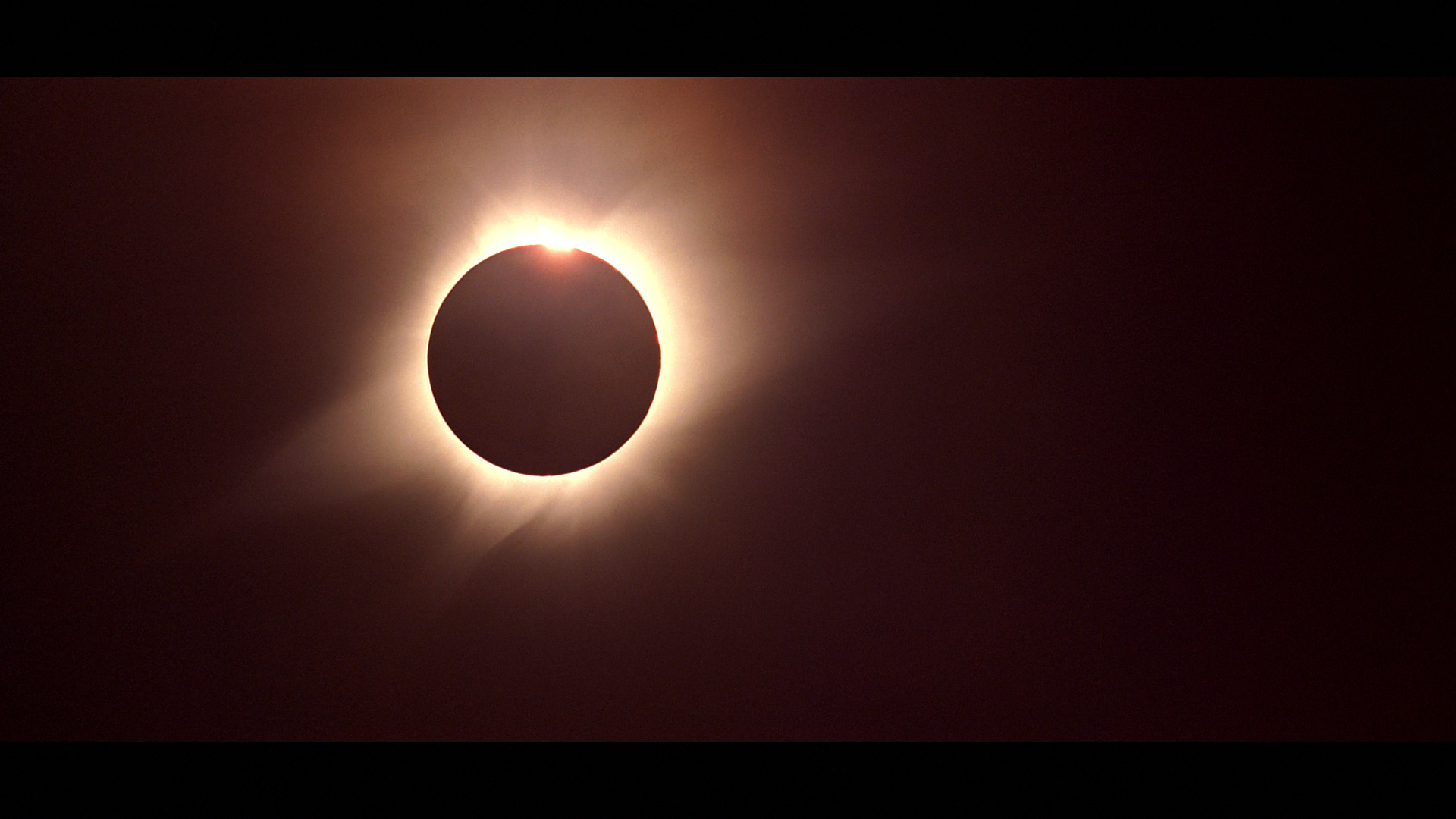
Baraka
I am convinced that this cinematic language must work well in VR. The Virtual Reality goggles have been called temples before, and indeed - it's the architecture that creates presence. The same principles that places of worship have used all over the world for millennia can make VR into something transcendental.
About 23 years after its release, I recently saw the film Baraka, and was extremely impressed by what it managed to achieve. Because it was shot on 70mm IMAX film, it doesn't look dated even for a moment. Its recent sequel, Samsara is almost equally impressive, but it's Baraka that has caught my interest here.
For me, the piece achieves the setting of an emotional curve with only images and music like none other. It delivers an extremely intense climax by postponing it; a single moment that hit me like a religious experience. Since I'm an atheist, this isn't something I have on a regular basis.
The movie slowly builds with imagery from nature and culture, intensifying near the end by showing charred corpses in a funeral ritual on the river Ganges - serene, but heavy. After this scene, we see a man handling a beam that is about to hit a huge bell. The quality of the images is such that the texture can almost be felt. We want the beam to hit the bell, we want to be satisfied by the atonal strike tone - but the moment is cut. Instead, we see Masai, in Trance.
A particular shot of an eclipse has been shown before in the film; it's a perfect example of internal symbolism. An image with otherwise no meaning can start to carry meaning inside the context of the piece.
The spiritual climax delivers when the director cuts to the iconic eclipse again - together with the sound of the immense bell.
I am convinced that this cinematic language must work well in VR. The Virtual Reality goggles have been called temples before, and indeed - it's the architecture that creates presence. The same principles that places of worship have used all over the world for millennia can make VR into something transcendental.
I would really enjoy creating something like the emotional curve from Baraka, including its fantastic soundtrack, in combination with VR. I'm obviously thinking about fractals, but real footage (if shot properly) could be even more amazing.
Baraka on IMDB:
http://www.imdb.com/title/tt0103767/