
Neural Networks interpreting Fractals
There's something intensely satisfying about peering into a machine's mind.
For me, one of the most amazing things about fractals is that at first glance they seem to resemble something from real life, but at closer inspection this appears an illusion. With the advent of Google's Deep Dream and many other Neural Networks I thought it was an interesting experiment to see how AI would interpret a fractal picture. I've done two simple tests to see where this could go.
First, I gave a couple of fractal images to Google's similar image search algorithm, to see what Google would think is on the picture.
So I uploaded this image of a pure fractal:

What would Google 'think' is on this picture? Some similar images came up, not surprisingly most where buildings, churches and such:

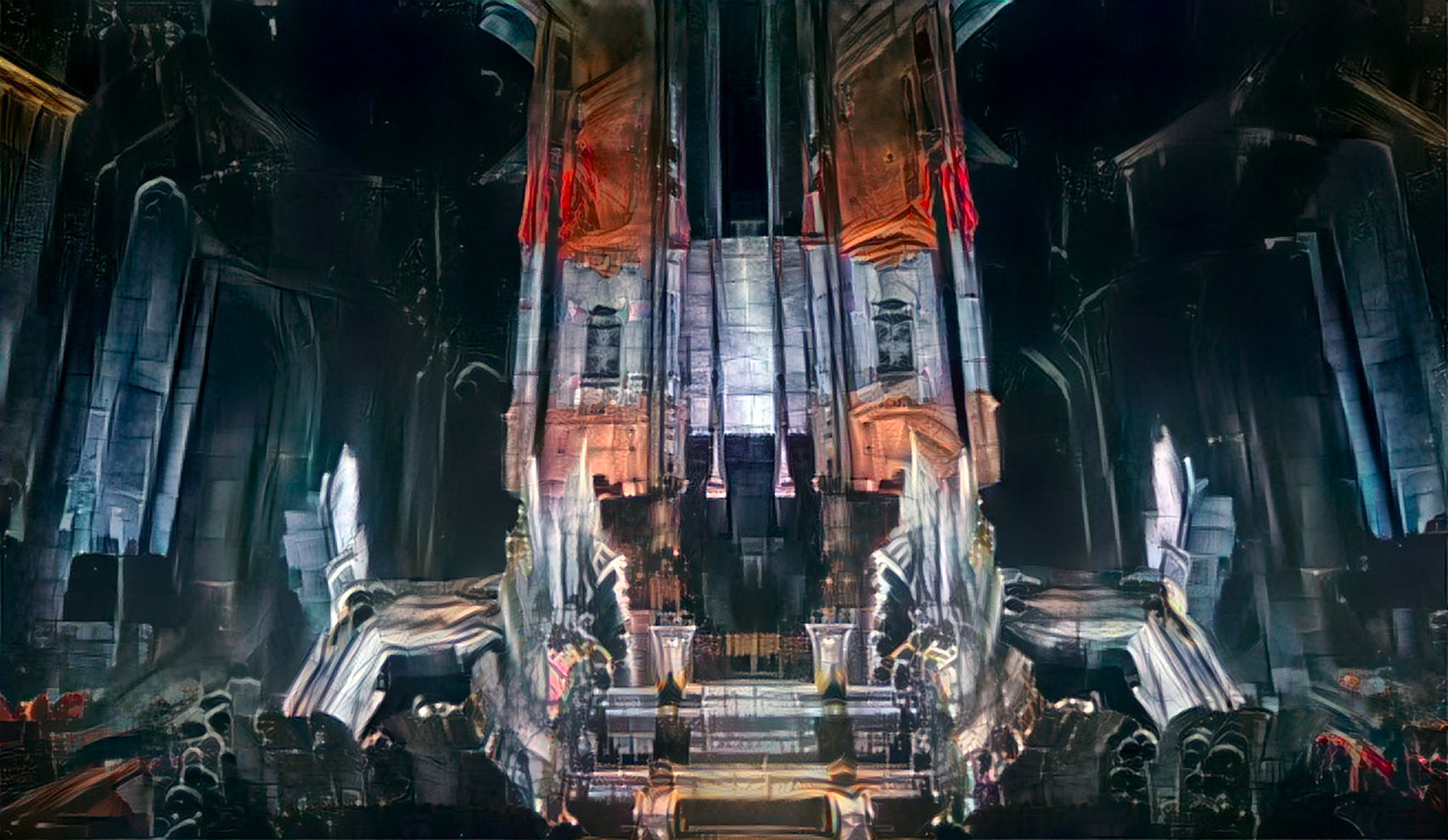
With DeepArt you can transform any image into a 'style' using a base picture and a style picture. I used the fractal image as the base image, and the church as a style image to render this:

Here are some other examples, all made from a base image and a style image based on its 'similar images' result:


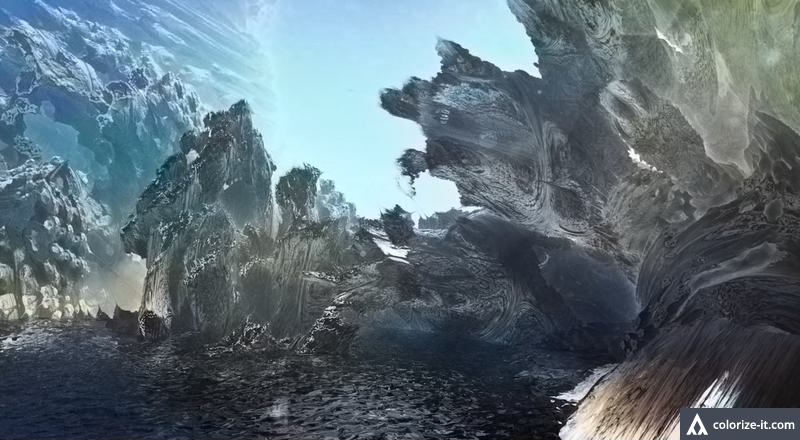
Another algorithm that uses deep learning colors in black and white pictures. Its algorithm has learned the best way to do this based on thousands of real images, so it can determine the difference between a sky which is supposed to be blue and a tree that is green.
Feeding it fractals in order to see what it would 'think' it needed to color it gave some interesting results. I made sure each image was black and white when I gave it to the algorithm. Most just got back completely sepia, which gave it still a beautiful, old look. Here's some of the most interesting results:
All processed using demos.algorithmia.com/colorize-photos/




Although all this technology is still very young, it's absolutely apparent to me that these techniques will start to play an extremely large role in creating and interpreting art, and this is very exciting to me.
There's something intensely satisfying about peering into a machine's mind.
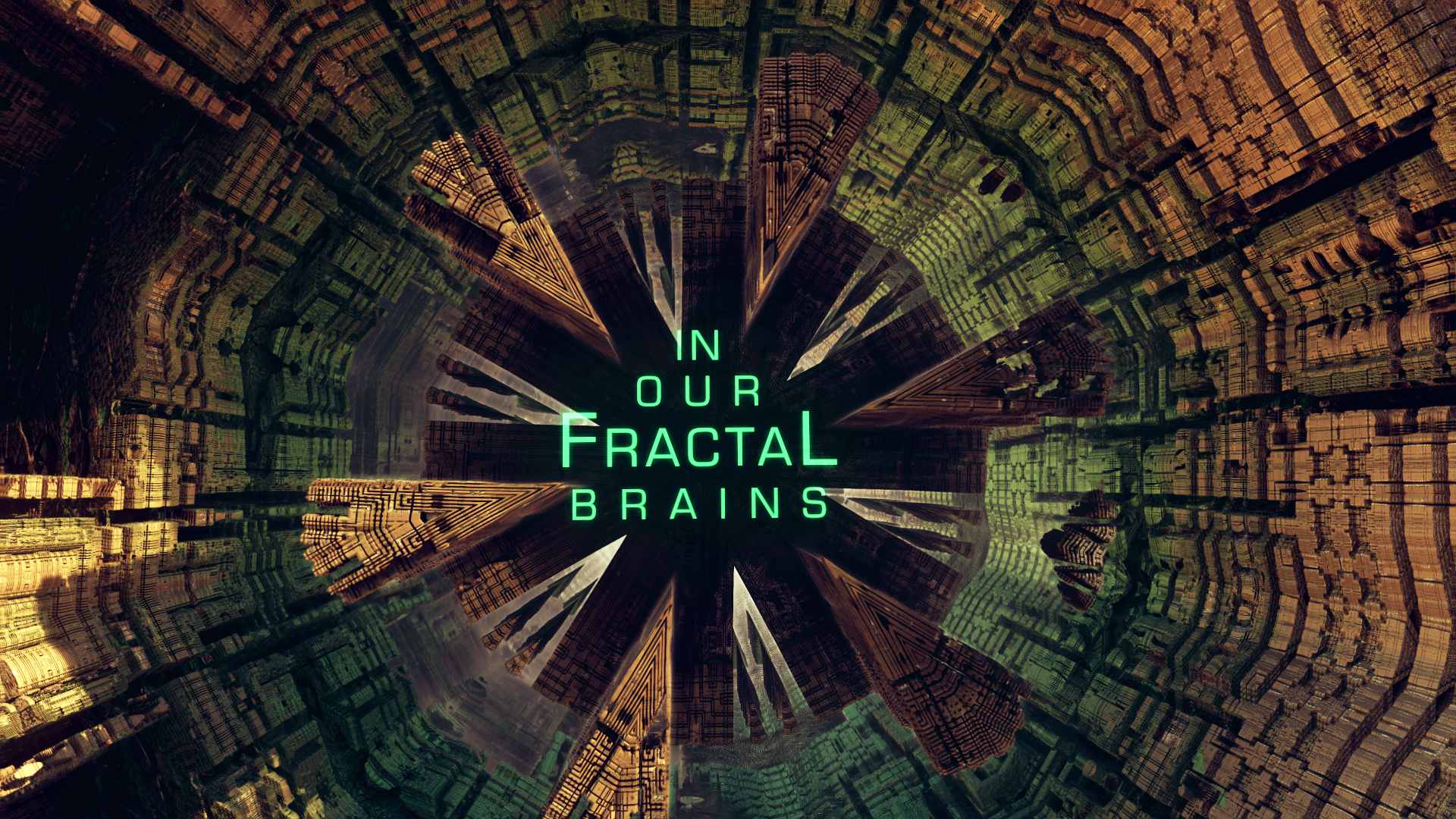
Some background on 'Our Fractal Brains'
I very much enjoyed the film 'The Secret Life of Walter Mitty' by Ben Stiller. The unconventional imagination of both the lead character as well as the director resonated with me. One of the scenes that stuck was the scene where Mitty first starts to travel, to Greenland. Everywhere through the shots we see words that form sentences. I wanted to do something like that, and that's how the idea of this short film emerged.
I very much enjoyed the film 'The Secret Life of Walter Mitty' by Ben Stiller. The unconventional imagination of both the lead character as well as the director resonated with me. One of the scenes that stuck was the scene where Mitty first starts to travel, to Greenland. Everywhere through the shots we see words that form sentences. I wanted to do something like that, and that's how the idea of this short film emerged. When I discovered Patrick O'hearn's Reaching Land trough Google Play Music's recommendations, It clicked. That was the score to use for this idea.
So I set out to write something like a poem, that kind of did that thing, and started digging through the vast Fractal Soil to unearth those little gems.
The 'message' of the video could easily be misinterpreted I think. So I'd like to clarify a little. I don't actually think the brain is a fractal, or that it is endless, or infinite. I'm not a spiritual person in that sense, that thinks we're all connected or something vague like that. I do think that the brain has some fractal properties, and the way it develops in embryonic development is not unlike the emergence of shapes and forms in the fractal software.
I'm more interested in the fact that we seem to attribute 'meaning' to things, as most of us don't realize it is only in us, where that meaning resides.
Graphic design is definitely not my strongest side (understatement) but I tried to play around with fonts and styles, having learned a little from my time with Carbon Media. Machmoving occurred mostly in After Effects, although I did the glass / crystal scene in 3dsMAX. That was by the way also the first time I used Transparency in MB3D. Something postponed for that long because of its ridiculous long render times, as well as its need for triple anti-aliasing, in stead of double, as I use to.
The response has been amazing to this video, and as I write this, it has just been picked by Vimeo as a Staff Pick, of which I am immensely proud.